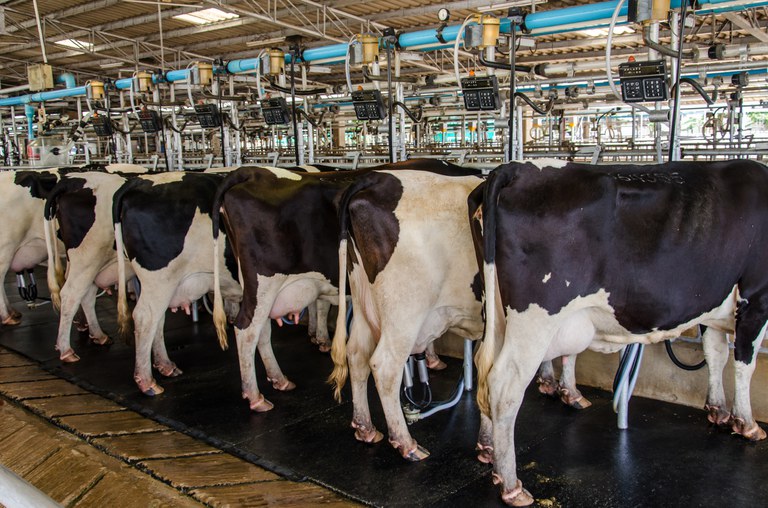
Milk production from Castrolanda Castro (PR) has consolidated itself as one of the main dairy basins in Brazil. In 25 years, the volume collected by the cooperative jumped from 26.6 million liters per year in 2000 to more than 536 million liters in 2025 — growth exceeding 1,900%.
In the last decade alone, the expansion was approximately 119% – in 2015, the cooperative's production was 244 million liters annually.
Despite the reduction in the number of producers over the years, the system has gained scale and efficiency. According to Agnaldo Bonfim Brandt, coordinator of Pool Leite – an entity operated by the Castrolanda, Frísia, and Capal Cooperatives, which aims to mediate relations between producers and industries – performance is not necessarily linked to the size of the properties.
“We have very efficient small farms. It all depends on the producer's profile and how they conduct the activity,” says Brandt.
In addition to volume growth, Castrolanda also registers quality indicators above the Brazilian average. In 2025, the cooperative's average Standard Plate Count (SPC) was 8,500 CFU/mL, well below the limit of 300,000 CFU/mL allowed by Brazilian legislation. This index measures the amount of bacteria present in milk and reflects the sanitary conditions of milking, storage, and transportation.
The Somatic Cell Count (SCC), an indicator related to the health of cows' mammary glands and the incidence of mastitis, closed 2025 at 196,000 cells/mL. In 2020, this number was 229,000. In several producing regions of Brazil, the averages exceed 500,000 cells/mL.
The cooperative also maintained stability in milk solids even with increased production. Fat remained close to 3.7%, while protein content increased from 3.31% in 2020 to 3.36% in 2025.
This text was translated by machine from Brazilian Portuguese.