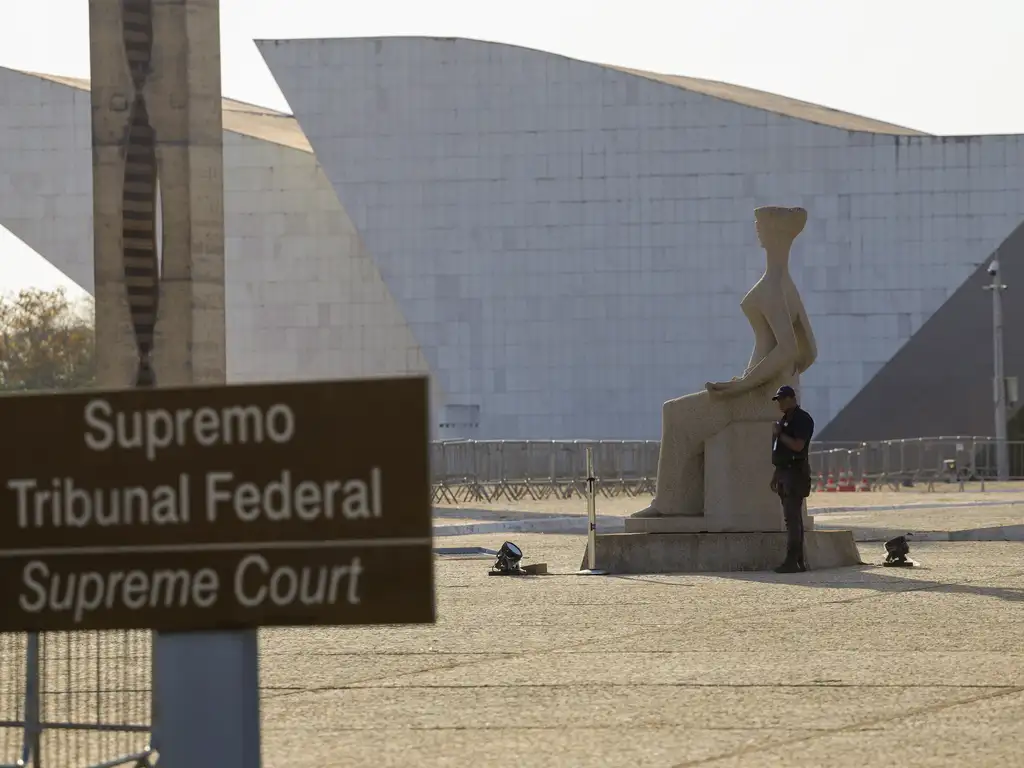
The Brazilian Supreme Court (STF) dismissed Direct Actions of Unconstitutionality (ADIs) 7,596 and 7,617, confirming the full conformity of the main provisions of Law No. 13,576/2017, which established the National Biofuels Policy (RenovaBio). The Supreme Court’s decision was published in the Official Gazette of the Union (DOU) this Thursday (18). The ADIs, proposed by the Democratic Renewal Party (PRD) and the Democratic Labor Party (PDT), questioned whether the provisions challenged by the legislation – which assign mandatory decarbonization targets to fossil fuel distributors – were violating the constitutional principles of equality, free initiative, free competition, polluter-pays, proportionality and consumer protection, and disrespecting the international commitments made by Brazil in the Paris Agreement. Upon analyzing the merits of the case, the Brazilian Supreme Court (STF) understood that RenovaBio “implements international commitments to mitigate greenhouse gas emissions assumed by Brazil in the Paris Agreement, embodying a public policy aimed at energy transition and environmental sustainability.” Furthermore, in the Supreme Court’s view, imposing decarbonization targets on fossil fuel distributors does not violate the principle of equality, just as the legal framework does not offend the principles of free enterprise and free competition. Therefore, there is no disproportionality or confiscation in the sanctions foreseen for non-compliance with the targets. With this decision, the rules structuring the market for Decarbonization Credits (CBIOs) and the annual decarbonization targets assigned to fossil fuel distributors remain valid. In this way, one of the main instruments of the national policy for incentivizing biofuels and reducing emissions in the transportation sector is preserved. “The Supreme Federal Court reaffirms the jurisprudence according to which it is not up to the Judiciary to substitute itself for the legislature in the formulation of public policies, except in cases of manifest constitutional violation, which is not the case here,” the document concludes. Check it out. Full decision in the Official Gazette..
This text was translated by machine from Brazilian Portuguese.