The official mission of the Brazilian Ministry of Agriculture and Livestock (MAPA) to Panama made progress in building partnerships aimed at strengthening the security of fertilizer supply for Brazil and expanding agricultural trade between the two countries. The agenda identified opportunities for cooperation in the logistics of agricultural inputs, bio-inputs, and agricultural technology, and resulted in the formal opening of the Panamanian market to Brazilian coconut and coffee seeds. This initiative is part of the Federal Government's efforts to diversify strategic logistics routes, expand access for Brazilian products to international markets, and promote actions that contribute to the competitiveness and sustainability of Brazilian agribusiness. With institutional support from the Inter-American Institute for Cooperation on Agriculture (IICA) in Panama, the Brazilian delegation held a series of meetings with representatives from the Panamanian public and private sectors. The organization's representative in the country, Miguel Arvelo, followed the program and contributed to the coordination of activities. One of the highlights of the mission was the technical visit to three port terminals in the Cristóbal complex, managed by one of Panama's largest port operators. The delegation learned about the infrastructure used for receiving, handling, storing, and transshipping cargo, as well as the integrated logistics systems that connect the country to the main international maritime routes. During the visit, procedures related to the transport of fertilizers, grains, natural gas, and raw materials used in fertilizer manufacturing were presented. The agenda allowed for an assessment of Panama's potential as a strategic logistics platform for supplying these inputs to the Brazilian market. The country's privileged geographic location and its connectivity to the main global maritime corridors, through the Panama Canal, reinforce its relevance for future cooperation initiatives aimed at strengthening agribusiness supply chains. The program also included a visit to the Agua Clara Visitor Center, on the Atlantic side of the new Panama Canal. On site, the delegation observed the operation of the locks and the passage of large vessels, deepening their understanding of the importance of the waterway for international maritime trade and global cargo logistics. The delegation also met with representatives of the Asociación Nacional de Distribuidores de Insumos Agropecuarios y Maquinarias (ANDIA), an entity that brings together companies from the agricultural inputs and machinery sectors in Panama. During the meeting, aspects related to the production, distribution, and logistics of fertilizers were discussed, as well as opportunities for cooperation in fertilizers, bio-inputs, and technological innovation applied to agriculture. Cooperation with the productive sector The agenda included meetings with representatives of the main entities in the Panamanian agricultural sector. The meetings addressed opportunities for technical cooperation, knowledge exchange, technology transfer, input logistics, and expansion of trade relations between the two countries. The discussions reinforced the mutual interest in expanding integration between the productive sectors of Brazil and Panama, especially in areas related to food security, innovation, and sustainable development of agriculture. Participating in the meeting were Alicia Jiménez, president of the Federación de Cámaras de Comercio, Industrias y Agricultura de la República de Panamá (FEDECAMARAS); Víctor Epifanio and Carlos Pitty, from the National Porciculturists Association (ANAPOR); Ivvana Quintero, from the National Molineros Association (ANALMO); Samuel Vernaza, from the Asociación Nacional de Ganaderos (ANAGAN); and Italo Salcedo, from the National Association of Poultry Farmers (ANAVIP).
Market opening
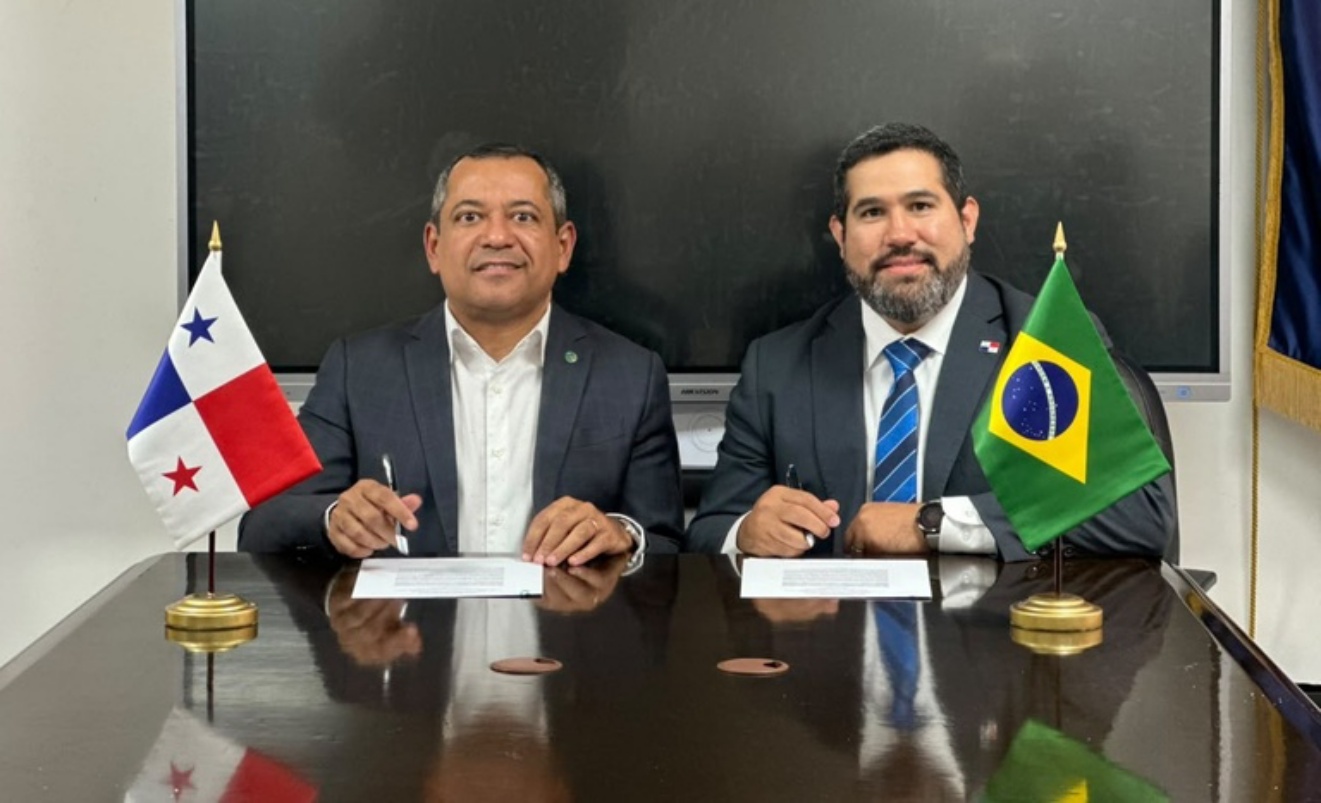
At the governmental level, the Brazilian delegation was received by the Minister of Agricultural Development of Panama, Roberto Linares, and the Vice-Minister José Aníbal Rincón Stanziola, in a meeting that included authorities from the areas of plant health, animal health, rural engineering and irrigation, agriculture, livestock, agro-industry, and rural development. During the meeting, documents were signed formalizing the opening of the Panamanian market to the import of Brazilian coconut and coffee seeds. This measure represents another step forward in the market access agenda led by the Ministry of Agriculture, Livestock and Supply (MAPA) and strengthens bilateral agricultural trade. The opening expands opportunities for Brazilian seed exporters and reinforces trust between the sanitary control systems of the two countries. The initiative also contributes to the diversification of trade relations and the strengthening of agricultural cooperation between Brazil and Panama. The mission's results reinforce MAPA's commitment to expanding markets for Brazilian agricultural products and building strategic partnerships that strengthen the supply of essential inputs for national agricultural production.
This text was translated by machine from Brazilian Portuguese.