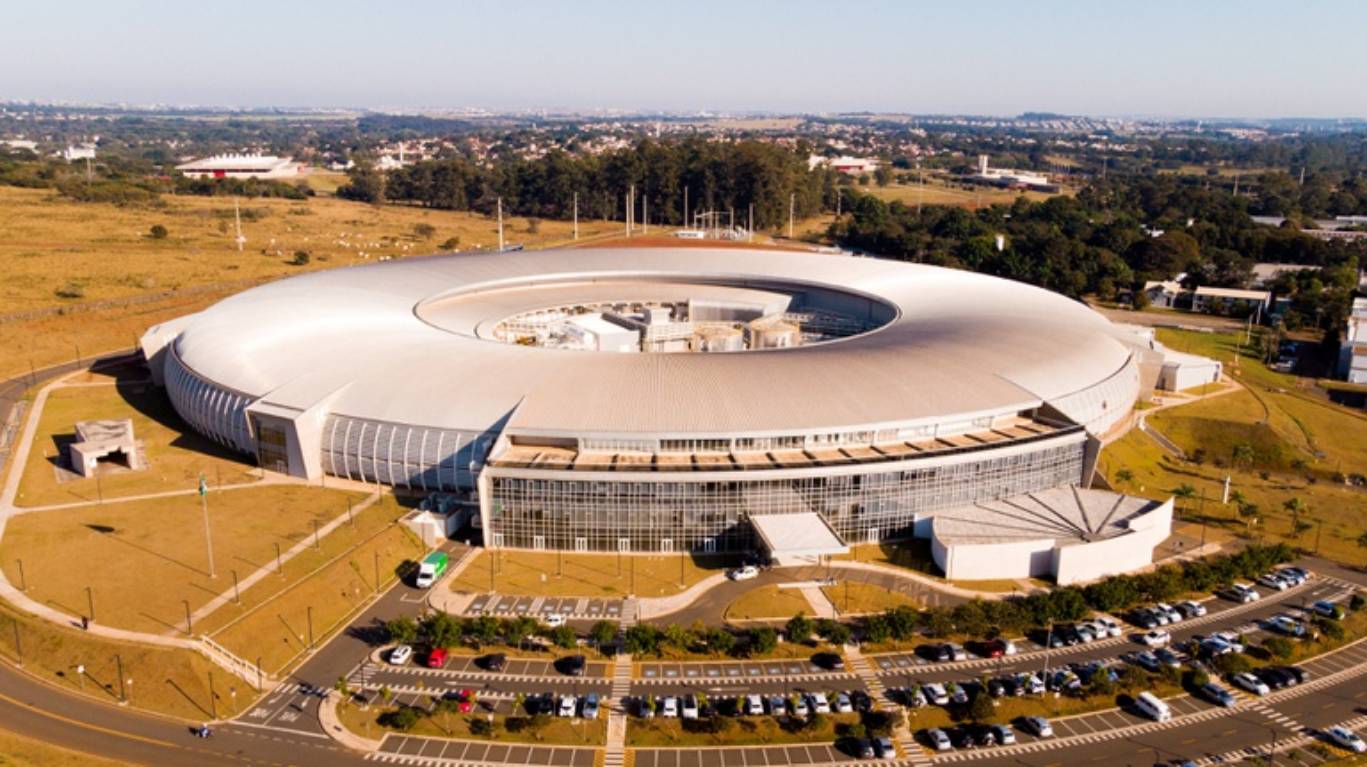
Behind the walls of the National Center for Research in Energy and Materials (CNPEM) in Campinas, Brazil, innovative research in biosciences and nanotechnology is targeting the energy transition, so necessary to curb global warming. CNPEM's Director-General, José Roque, spoke about this at the Science, Technology and Innovation Forum at the UN headquarters in New York in May. Following the event, he spoke with UN News and explained that the area of biofuels is one of the research center's top priorities.
New fuels
“For over a decade now, we've had the capacity to produce enzymatic cocktails for the transformation of various types of biomass and yeast development programs for production, from traditional fuels like ethanol, but also working on advanced aviation fuels, which is one of the great challenges: making commercial aviation more sustainable. So we've been doing this, and it's an area that I think can have a significant impact on mobility in Brazil and Africa, as well as other countries.” He emphasized that nations with great biodiversity have the opportunity to explore diverse varieties of biomass. Roque argued that materials science has a central role in achieving the UN Sustainable Development Goals, as it can point to new paths for the energy transition.
Breaking the dependence on critical minerals
He explained that this could mean less dependence on so-called critical minerals, such as rare earths, cobalt, lithium, and nickel. “If I can make permanent magnets that don't use rare earths or complex and difficult materials, which may even have sustainability problems themselves, that's a great challenge. If we look at solar energy, there has been a very large price drop, with advances in materials and batteries. There has also been enormous progress in cost reduction and sustainability in production itself.” Regarding materials, CNPEM has the capacity for both research and development, with a focus on “future technologies.”
Hydrogen as an energy source
Roque said that in addition to seeking materials that can optimize solar or wind energy, the research center is also focused on the production of other energy sources, such as hydrogen. “So we have research looking into the future of possible materials for photoelectrolysis, using solar energy to break down water and produce hydrogen. Today we can achieve this with traditional electrolysis, depending on the electrical grid, or, if you want to do it sustainably, by connecting it to wind or solar energy sources. But you can do a direct conversion using materials that will use the sun, sunlight, and directly break down water. This is one of the developments, for example, that CNPEM has been doing and that involves this whole issue of new materials.” For the researcher, since energy is one of the major global issues, it is essential to always look for materials that are more efficient and, in themselves, sustainable, that is, whose production does not involve the destruction of nature. CNPEM houses the Sirius particle accelerator, considered one of the largest scientific infrastructures in Brazil.
This text was translated by machine from Brazilian Portuguese.