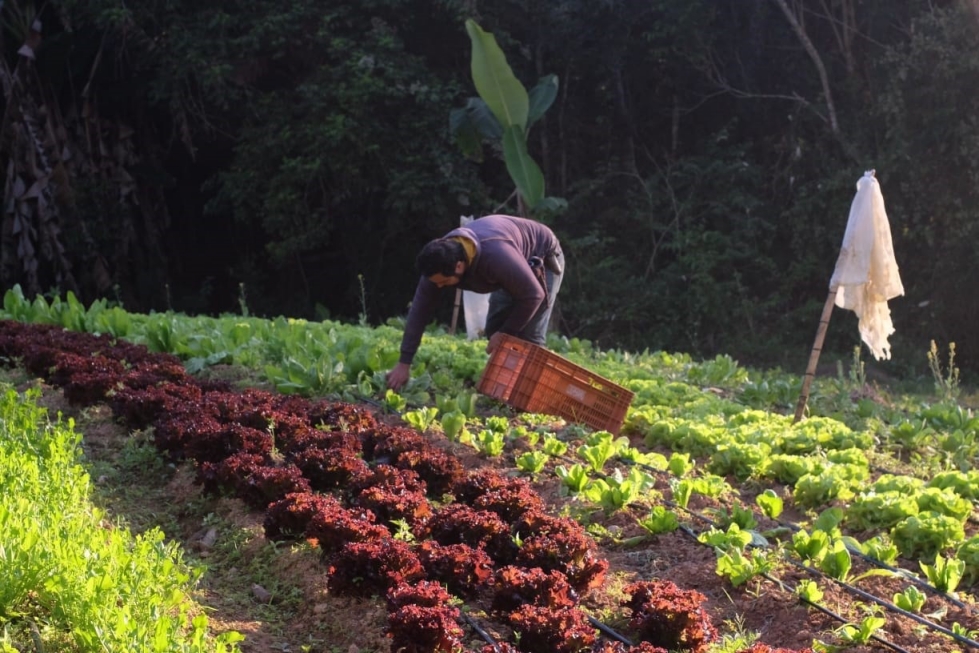
Seasonal workers eligible for Bolsa Família will remain in the social benefit program even with a temporary work contract. Bill 715/2023 guarantees this protection for seasonal workers and was approved by the Chamber of Deputies this Tuesday (19) and is now awaiting presidential sanction. According to the final approved text, the money obtained from the seasonal contract is not included in the calculation of per capita family income — a criterion for maintaining eligibility for access to the program. In addition, information relating to seasonal work must be recorded in a specific field in the Digital Bookkeeping System of Tax, Social Security and Labor Obligations (eSocial). The proposal had been approved by the deputies in 2024 and underwent changes in the Federal Senate, which led to its return to the Chamber. In the understanding of the rapporteur of the matter and coordinator of the Property Rights Commission of the Parliamentary Agricultural Front (FPA), Deputy Evair de Melo (Republicanos-ES), the changes ended up modifying the original intent of the matter. "Although the Senate proposal considers fluctuations in family income and allows for the calculation of per capita income based on the annual average of earnings, it does not effectively ensure the permanence of seasonal workers' families in the Program, even when the condition of social vulnerability resulting from the intermittency inherent in rural activity persists. In this respect, the text of the Federal Senate is not meritorious. Despite rejecting most of the changes made in the Senate, the rapporteur accepted a provision so that the guarantees will take effect immediately. This mechanism exempts employers of seasonal workers from reporting data related to the contract in the specific field of eSocial. However, this exemption only applies while the field is not regulated and operational. Another point maintained in the final wording of the text is the definition of what constitutes a seasonal contract. According to the text, these agreements will have a "duration dependent on seasonal variations in agricultural activity," that is, what will define the length of the contract is the need for the crop itself."
FPA articulation
The project was approved with the support of the parliamentary group and also of parties that do not usually vote together with the FPA, such as the Socialism and Liberty Party (PSOL). The proposal is part of Agro Day, a mobilization of the front to advance the agendas of the agricultural sector in the Chamber. “Finally, the possibility of voting is extremely important so that we can have access to labor. We are ensuring that temporary, seasonal workers can have their work cards signed and guarantee social benefits,” highlighted the president of the FPA, Deputy Pedro Lupion (Republicanos-PR). Along the same lines, the author of the bill and Political Coordinator of the FPA, Deputy Zé Vitor (PL-MG), recalled the benefits that the project should bring. “This generates workforce qualification, brings people closer to the job market, and guarantees security for rural producers who can employ without the risk of remaining in clandestinity or informality,” he commented. The seasonal workers project was a long-standing demand of both producers and rural workers. This is because reports indicated that many workers chose not to work in the harvests for fear of losing their Bolsa Família (family allowance) benefits. According to the bill's rapporteur in the Senate and vice-president of the FPA (Agricultural Parliamentary Front), Senator Jaime Bagattoli (PL-RO), the measure offers a solution that affects different areas of agriculture, especially in the fruit and coffee sectors. "It will solve the problem of a large part of the manual labor we have in the countryside, addressing the deficit of more than 800,000 jobs across Brazil. We will strengthen fruit farming in the São Francisco Valley, coffee harvesting in Espírito Santo, Rondônia, and Minas Gerais, and apple and onion harvesting, both in the state of Santa Catarina. We will solve a problem in several states," said the parliamentarian.
This text was translated by machine from Brazilian Portuguese.