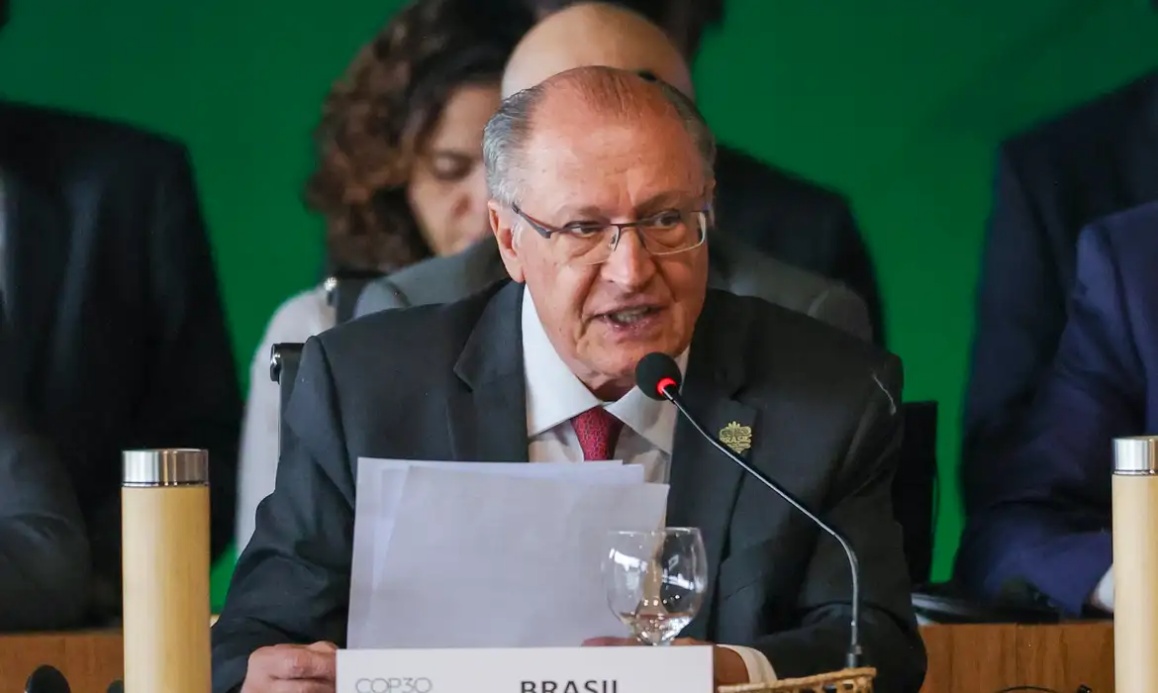
Vice-President Geraldo Alckmin said on Saturday (14) that the federal government is currently prioritizing guaranteeing supply and "keeping the price" of diesel down, according to a note from "Agência Brasil". He defended the actions announced this week to eliminate PIS/Cofins rates on diesel and to create a subsidy of R$ 0.32 per liter. In total, the expectation is to reduce prices by at least R$ 0.64 per liter at the pump. The measures take into account that Brazil imports 25% of its diesel. Due to the war in the Middle East, there has been an increase in the international price of a barrel of oil, which impacts fuel prices at the pump. The vice-president contextualized that the rise in diesel prices could increase the cost of food and transportation, as well as raise inflation. Alckmin, who is also Minister of Development, Industry, Trade and Services (MDIC), visited a Scania dealership in Santa Maria (DF) in connection with the progress of the Move Brasil program (the public policy to encourage the renewal of the truck fleet). Alckmin considered the federal government's action "intelligent" and criticized a measure by Jair Bolsonaro's government (in 2022), which limited the collection of the Tax on the Circulation of Goods and Services (ICMS) on fuels and also vetoed compensation to the states. "The states went to court because they lost revenue. Everything ended up in court, turning into a gigantic debt settlement," he stated. The vice-president explained that, although Brazil is an oil exporter, it is a diesel importer because it still does not have enough refining capacity for the local market. Regarding the Move Brasil program, the vice-president defended the strategy of boosting industry with "accelerated depreciation" of equipment. "We launched Move Brasil investing R$ 10 billion, and we went from average interest rates of 23% to 13%." “The response was spectacular,” he assessed. He said that, in the first two months of the program, R$ 6.2 billion of the planned resources had already been spent. He added that the program encouraged independent truck drivers to buy a brand-new or used vehicle. The vice-president also defended the initiative to stimulate the sustainable car industry by eliminating the Tax on Industrialized Products (IPI). A sustainable car is one that is manufactured in Brazil, flex-fuel, with 80% recyclability, and that cannot emit more than 83 grams per kilometer driven. Alckmin explains that this measure will have an impact on environmental pollution. The vice-president also warned that better equipment on the roads tends to reduce accidents. “When you have technology, it’s like a vaccine. This will prevent accidents and deaths.”
This text was translated by machine from Brazilian Portuguese.