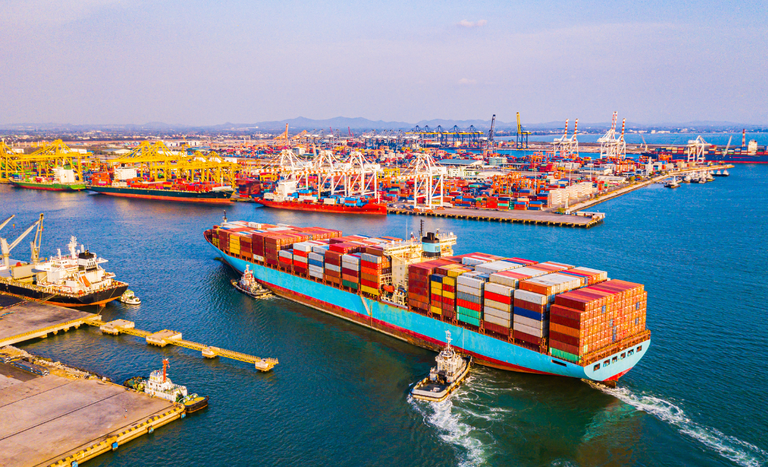
Brazilian agribusiness exports totaled US$16 billion in May 2026, an 8.2% increase compared to the same month last year. This performance secured the sector a 50.2% share of Brazil's total exports for the period. In the accumulated period from January to May, agribusiness exports reached US$70.5 billion, a 4.6% increase, also a record for the first five months of the year. Compared to May of last year, the volume exported by the sector grew by 3.6%, while the average price of products sold abroad registered a 4.4% increase. Imports of agricultural products totaled US$1.6 billion, a 3.6% decrease in the same comparison, resulting in a surplus of US$14.4 billion for the month, a 9.7% increase.
China leads purchases of Brazilian agricultural products.
China maintained its leading position among destinations for Brazilian agribusiness exports, with purchases totaling US$6.3 billion in May and a share of nearly 40% of the sector's export portfolio. This value represents a 12.8% increase compared to May 2025. The European Union occupied second place, with imports of US$2.4 billion, equivalent to 15% of Brazilian agricultural exports in the month, and a 5.4% increase year-on-year. Next were the United States, with US$837 million exported and a 5.2% share, despite a 28% decrease compared to the same period last year. Markets such as Bangladesh, Thailand, Vietnam, Pakistan, Turkey, and Jordan also stood out, significantly increasing their purchases of Brazilian agricultural products during the month.
Soy and animal proteins boost results.
Soybeans remained the main export product of Brazilian agribusiness. External sales reached US$6.3 billion, a 14.6% increase compared to May 2025. The exported volume reached 14.8 million tons, a 5.1% year-on-year increase. The three main animal proteins exported by Brazil – beef, chicken, and pork – registered record values and volumes for the month of May. Exports of fresh beef totaled US$1.7 billion, a 50.2% increase, with shipments of 262,000 tons, a 20.2% year-on-year increase. China remained the main destination for the product, with purchases of US$1 billion, equivalent to 61.4% of Brazilian exports of the protein in the period. Fresh chicken meat reached US$883 million in exports, a 40% increase, while the volume shipped reached 442,000 tons, a 32.3% increase. The result, with shipments to more than 135 destinations in May, reflects the continued international confidence in Brazilian protein. Meanwhile, fresh pork exports reached US$278 million, a 1.4% increase, with shipments of 111,000 tons, a 5% growth, also setting a record for the period.
Segments among the highlights
Among the segments with the most significant growth in agribusiness exports in May, the soybean complex totaled US$7.5 billion, a 16.3% increase compared to the same month of the previous year. Animal proteins reached US$3.2 billion, a 38% increase, while fibers and textile products totaled US$483 million, a 39.6% rise. Corn oil also registered record performance for the month, with US$28.5 million exported and a 798% increase; cotton, with US$450 million and a 45.3% increase; and chicken offal, which reached US$62.5 million, a 20.5% increase. Less traditional products also expanded their share in the Brazilian export agenda. Highlights include sesame seeds, pet food, peanuts, corn oil, rice, bread, biscuits, pastry products, and yerba mate, all with record results in value or volume exported.
DDG expands international presence
Among the products with the greatest potential for expansion in the international market is DDG (Dried Distillers Grains), a byproduct of the corn-based biofuel industry used primarily in animal feed. Between January and May 2026, Brazilian exports of the product totaled US$130 million, a growth of 37.7%, while the volume shipped reached 555,000 tons, an increase of 30.5%. These figures represent historical records for the period. This performance follows the strategy of opening and expanding markets conducted by the Ministry of Agriculture and Livestock (MAPA). Since 2023, 21 new markets have been opened for Brazilian DDG. In the first five months of 2026, the main destinations for the product were China (US$63.2 million), Turkey (US$31 million), Vietnam (US$11.5 million), and New Zealand (US$7.5 million).
International confidence and market diversification
According to the Minister of Agriculture and Livestock, André de Paula, the performance demonstrates the sector's relevance to the national economy. “When agribusiness accounts for half of Brazilian exports in a month, we are talking about income in the countryside, jobs in industry, strengthening cooperatives, and a greater Brazilian presence in the world. This result stems from the work of producers, the agro-industry, exporters, and the government's ongoing efforts to open avenues and expand markets,” he emphasized. According to the Secretary of Trade and International Relations of the Ministry of Agriculture, Luís Rua, the result reflects Brazil's ability to meet the growing global demand for reliable and competitive suppliers. “In a global context marked by geopolitical uncertainties, reorganization of trade flows, and greater demands from consumer markets, Brazil has managed to position itself as a predictable, competitive supplier capable of meeting diverse demands. The May results show not only the strength of large complexes, such as soybeans and animal proteins, but also the progress of products that have been gaining ground in the export agenda. Since 2023, 639 market openings and more than 250 expansions have been recorded, the result of a strategic agenda that expands destinations, reduces dependencies, strengthens production chains, and transforms the capacity of Brazilian agribusiness into a concrete presence in international trade,” he stated.
This text was translated by machine from Brazilian Portuguese.