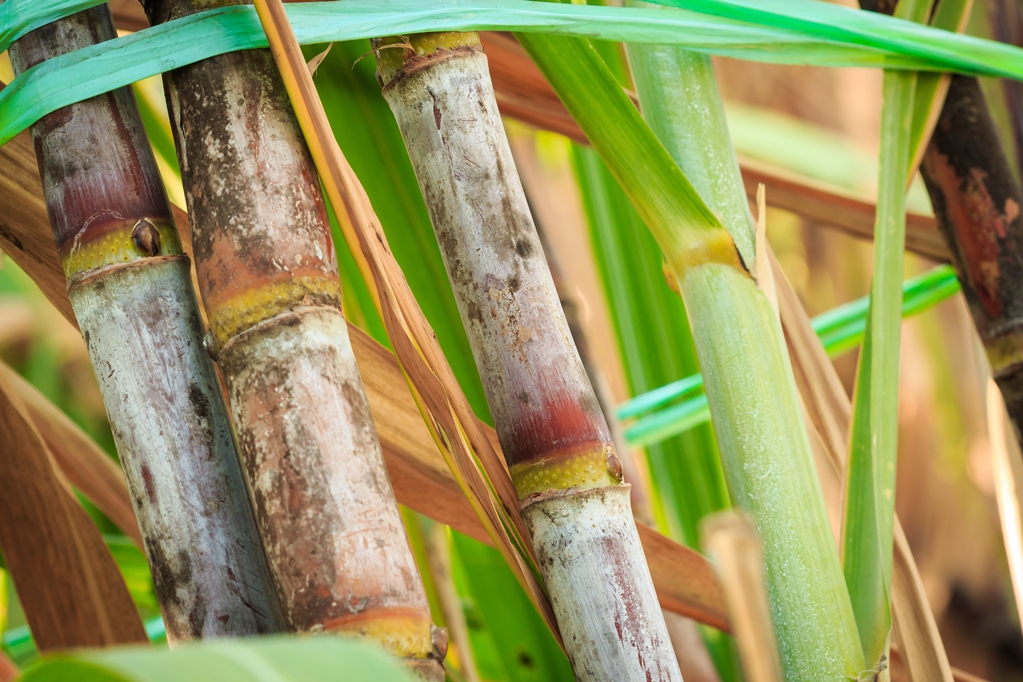
Sugar cane processing plants burn sugarcane bagasse to generate electricity; however, the natural moisture content of the bagasse reduces thermal efficiency and limits energy generation. To overcome these problems, researchers at the Faculty of Chemical Engineering (FEQ) of the State University of Campinas (Unicamp) have developed a new method for drying sugarcane bagasse that uses carbon dioxide (CO2) as the main agent in the moisture removal process. This knowledge has been licensed to Quimergia Inovação, a registered subsidiary and academic spin-off of Unicamp, founded by the researchers themselves, to bring the technology to market. "Current methods fail to solve these problems safely and economically due to the very characteristics of bagasse. The dryers used operate through direct contact between bagasse particles. In this process, heat is transferred directly to the material, promoting the evaporation of moisture from the bagasse. However, combustion gases are not only a heat source, as they contain a high concentration of oxygen, which favors oxidation reactions and increases the risk of ignition of the material. In addition, they contain acidic compounds, soot, ash, and other suspended particles," says Jean-Christophe Bonhivers, researcher at FEQ and co-founder of Quimergia Inovação. As a solution to this bottleneck, the new dryer proposes the reuse of carbon dioxide (CO2) generated by the mills themselves. According to Bonhivers, the choice of gas brings chemical and safety advantages, since the greater polarity of the molecules reduces the surface tension of water in the wet bagasse, facilitating drying. "CO2 is not an oxidizing agent, unlike atmospheric air, which contains about 21% oxygen. This characteristic helps reduce the risk of combustion in biomass with fine particles, such as bagasse," explains Bonhivers. The process was developed by a team of five chemical engineers affiliated with FEQ (Faculty of Chemical Engineering). They were already working on research to valorize the carbon dioxide generated in sugar mills, so its application as a drying agent emerged as a "natural path," comments Bonhivers. In addition to him, professors Rubens Maciel Filho and Adriano Pinto Mariano, and researchers Carlos Eduardo Vaz Rossell and Riann de Queiroz Nóbrega participated in the research. To bring this knowledge to the market, the group decided to open a company to commercialize the method, which proved to be highly innovative. The Inova Unicamp Innovation Agency supported the strategy of creating the Unicamp spin-off company and conducted the entire process of providing know-how to Quimergia Inovação. "The support from Inova Unicamp and the know-how licensing process were fundamental to the creation and consolidation of Quimergia. Being a spin-off company of the State University of Campinas represents a great privilege and also a strategic advantage, as it allows us to operate based on solid scientific knowledge and institutional support. As we are a team formed mainly by engineers, without in-depth experience in administrative and bureaucratic procedures, Inova's support was decisive," says Nóbrega about the positive impact of the work carried out by Inova Unicamp. Quimergia Inovação is a registered spin-off company of Unicamp, having been founded by professors and researchers linked to the University, and is also considered an academic spin-off, having been created from the results of research and knowledge produced at Unicamp.
Practical and structural advantages of the technology
The new method was developed for plants that produce ethanol, sugar, and bioenergy, using sugarcane bagasse as fuel in their boilers. Designed to optimize energy performance, the technological solution also offers advantages such as reduced equipment damage, the risk of spontaneous combustion of bagasse, low thermal efficiency, and maintenance costs. "CO2 is used in the drying process and then follows its cycle of release into the atmosphere and subsequent fixation by sugarcane through photosynthesis. By acting as an inert gas, carbon dioxide eliminates or reduces the oxygen content in the atmosphere surrounding the bagasse particles, suppressing the conditions necessary for the material's auto-ignition," explains Rossell, one of the inventors of the technology and also co-founder of Quimergia Inovação, regarding the invention's differentiating features. According to the inventor, the innovation requires some adjustments to the existing machinery in the plants, the boiler feeding system, and the intermediate storage of bagasse. "The boiler will need to be adjusted to operate with low-moisture bagasse. It will also be necessary to incorporate equipment to recover the energy contained in the boiler gases and transfer it to the drying medium with CO2," he adds.
Energy transition with a positive environmental impact
With dried bagasse, mills can burn larger volumes, improve energy performance, expand positive environmental impact, and generate more electricity. "Utilizing the CO2 generated during fermentation for bagasse drying has the potential to increase the environmental and economic efficiency of mills. Increasing electricity generation using the same amount of bagasse also opens up new business opportunities," assesses Mariano. Energy generation creates a new revenue stream with the sale of surplus production. "The surplus electricity can, for example, be used in the production of green hydrogen through water electrolysis. This will certainly help Brazil further increase its leading role in the green economy and the energy transition," assesses the inventor.
Scalability and current stage of development of the sugarcane bagasse dryer.
According to the researchers who developed the technology, it is estimated that the dry matter content of the bagasse will increase from 50% to 80%, making it possible to increase high-pressure steam production by about 30% and the sale of surplus electricity by approximately 50%. “The potential market for the commercialization of the new dryer is vast. There are about 400 mills that produce sugar and/or ethanol in Brazil. The technology could also be exported to other countries, such as the United States, Australia, China, India, and Thailand, and could also be adapted for corn distilleries in the future,” predicts Nóbrega, highlighting the possibility of applying the technology in other countries and areas of industry. Currently, the proof of concept of the technology has already been validated with the support of the São Paulo Research Foundation (FAPESP), through Phase 1 of the Innovative Research in Small Businesses Program (PIPE). Tests conducted under controlled conditions have proven the viability of the solution for the optimized and safe drying of sugarcane bagasse. The technology is now advancing to the next stages of development, larger-scale validation, and deployment of a pilot unit. “The experiments conducted so far aim to demonstrate the technical feasibility of drying bagasse using biogenic CO2, based on controlled laboratory results. We are making progress in coordinating the development of a pilot unit. We have already begun discussions with potential industrial partners, including mills in São Paulo. The strategy consists of structuring, together with these mills, a project for the implementation of the pilot plant,” concludes Nóbrega.
Award-winning spin-off
The company Quimergia Inovação was awarded in the Academic Spin-off category in 2026. The company was created from the results of research developed at Unicamp, which generated the provision of know-how, enabling this knowledge to be applied in industry and become a business.
This text was translated by machine from Brazilian Portuguese.