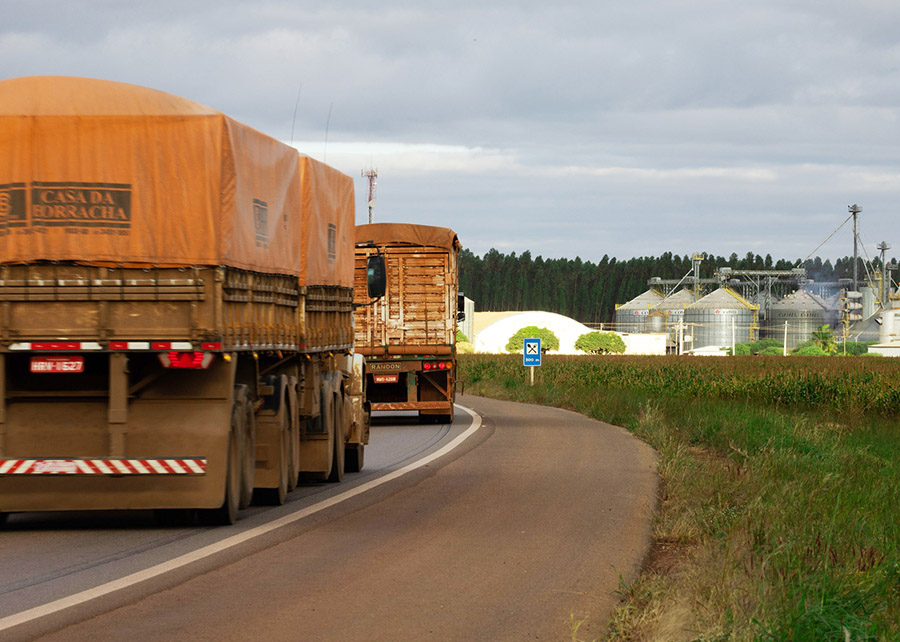
The high operational costs for transporting agricultural products, especially due to diesel and other logistical inputs, have put pressure on freight prices on the main routes analyzed by the National Supply Company (Conab). This scenario did not allow for a significant drop in cargo transport services, keeping prices at high levels, as shown in the May edition of the Logistics Bulletin, a survey published on Friday (29) by the state-owned company. “When analyzing the market between March and April of this year, the prices charged vary according to the progress of the harvest of the first crop products. However, when compared with the prices charged in the same period last year, it is observed that the quotations are at higher levels, especially due to the cost of fuel, which continues to be the main factor supporting these values,” explains the Superintendent of Operational Logistics of the Company, Thomé Guth. “The measures adopted by the government to reduce the impact of the international oil price increase, such as the exemption of federal taxes on diesel, helped to mitigate the increases caused by the war in the Middle East,” Guth points out. In Mato Grosso, the country's main grain-producing state, the road freight market showed very stable behavior, with prices remaining at levels considered high for the period. A similar scenario was observed in Mato Grosso do Sul, which showed a more stable dynamic in the last month, after the period of greatest logistical pressure observed during the peak of the soybean harvest. Even so, the high volume produced and the continuity of shipments destined for the external market maintained consistent demand for road transport of grains, sustaining the price levels of agricultural freight in important logistical corridors of the state. Another important grain-producing state in the Midwest, Goiás, the short-term scenario points to a monthly reduction in grain transport prices. However, the cost of fuel for transporters in Goiás remains, on average, 15% higher than that recorded in April 2025, reflecting an increase in prices compared to the previous year. In the Federal District, price increases were observed on all routes surveyed. The soybean harvest extends until April in the Federal District, but loses intensity throughout the month, resulting in still high freight costs, but with less upward pressure. Freight logistics in Paraná showed occasional variations in the last month compared to March, maintaining pressure on costs on specific routes—a scenario influenced by global geopolitical instability. In Bahia, freight rates showed an upward trend in the main areas where cultivation occurred in the spring/summer, while prices continue to trend downward in areas where cultivation occurs in the autumn/winter. In Maranhão, the transport of production for export or domestic consumption is intense with the progress of the soybean harvest. Even so, Conab observed a drop in prices on most routes surveyed when comparing April to March of this year. Fuel prices in the state of Maranhão increased, mainly in the first half of the month, but this trend weakened towards the end of April. Diesel subsidy measures and tax relief, including the federal government's reduction of PIS/Cofins taxes to zero, along with Petrobras's influx of additional volumes to bolster diesel supply, helped reduce the risk of shortages and limit further price increases. The freight market in Piauí showed increased activity compared to the previous month. Despite this, the average freight prices for the agricultural sector on the main routes surveyed by Conab remained stable, even with the upward trend in prices due to higher demand driven by increased soybean exports, which was offset by the drop in fuel prices recorded in the state. In São Paulo, the market showed a slight decrease in freight rates in April, following a sharp increase in March. While the high volume of exports required greater demand for freight, the federal government's policies of subsidizing and exempting diesel fuel were factors that contributed to the reduction in prices.
This text was translated by machine from Brazilian Portuguese.