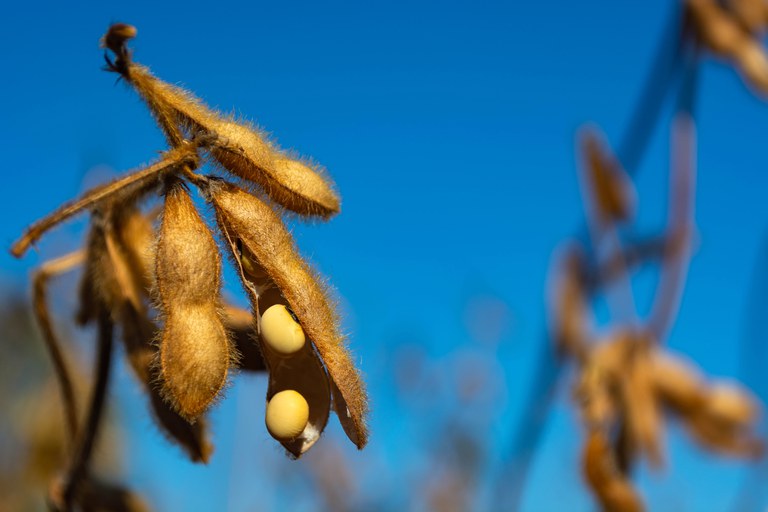
The Mato Grosso Agriculture and Livestock Federation System (Sistema Famato) informs, in a statement sent to the professional press, that the phytosanitary calendar for soybeans in Mato Grosso for the 2026/2027 crop season remains unchanged following the publication of a new Joint Normative Instruction from the State Secretariat for Economic Development (Sedec) and the Mato Grosso Agricultural Defense Institute (Indea-MT). Therefore, the sanitary break will occur from June 8th to September 6th, 2026, and soybean planting will be authorized between September 7th, 2026 and January 7th, 2027. The update formalizes measures for the prevention and control of Asian soybean rust in the state, but preserves the dates previously established by Normative Instruction No. 002/2025. Sistema Famato advises rural producers to pay attention to the deadlines and obligations stipulated in the state legislation on plant health defense. During the fallow period, the presence of live soybean plants is prohibited in fields, roadsides, storage areas, and other locations where spontaneous germination may occur. This measure is considered one of the main strategies to reduce the survival of the fungus that causes Asian soybean rust between harvests. Among the obligations of producers is the elimination of so-called "volunteer" plants, which are those that germinate spontaneously after harvest. Control must be carried out within the fallow period to prevent these plants from serving as a green bridge for the maintenance of the disease in the field. Another point foreseen in the regulations is the continuous monitoring of crops to identify Asian soybean rust. In case of detection of the disease, the producer must carry out immediate control. The rules also cover the transport of soybean grains and seeds, which must be properly packaged to avoid spills on highways and public roads. According to Alex Rosa, a technical analyst of Agriculture at Famato, inspections may result in notifications when volunteer plants are identified in violation of the regulations. “Failure to comply with the measures foreseen may result in warnings, destruction of irregular areas, fines, and other penalties provided for in the state legislation on plant health defense,” explained Alex. Asian soybean rust, caused by the fungus Phakopsora pachyrhizi, is considered one of the most severe diseases affecting soybean crops. The sanitary break and compliance with phytosanitary measures help reduce the survival of the fungus, decrease the pressure of the disease in crops, and preserve the sustainability of agricultural production in Mato Grosso. Another important point is that producers must continuously monitor their crops to identify Asian soybean rust and implement immediate disease control if detected. The rules also cover the transport of soybean grains and seeds, requiring that loads be properly packaged to prevent spills on highways and public roads. According to Alex Rosa, a technical analyst of Agriculture at Famato, when volunteer plants are identified during inspections, the producer may be notified by Indea-MT. “Failure to comply with the measures outlined in the regulations may result in warnings, destruction of irregular areas, fines, and other penalties provided for in state plant health defense legislation,” explains Alex. Asian soybean rust, caused by the fungus Phakopsora pachyrhizi, is considered one of the most severe diseases affecting soybean crops. The sanitary break and compliance with phytosanitary measures are identified as fundamental strategies to reduce the fungus's survival between harvests, decrease disease pressure in crops, and contribute to the sustainability of agricultural production in Mato Grosso.
This text was translated by machine from Brazilian Portuguese.