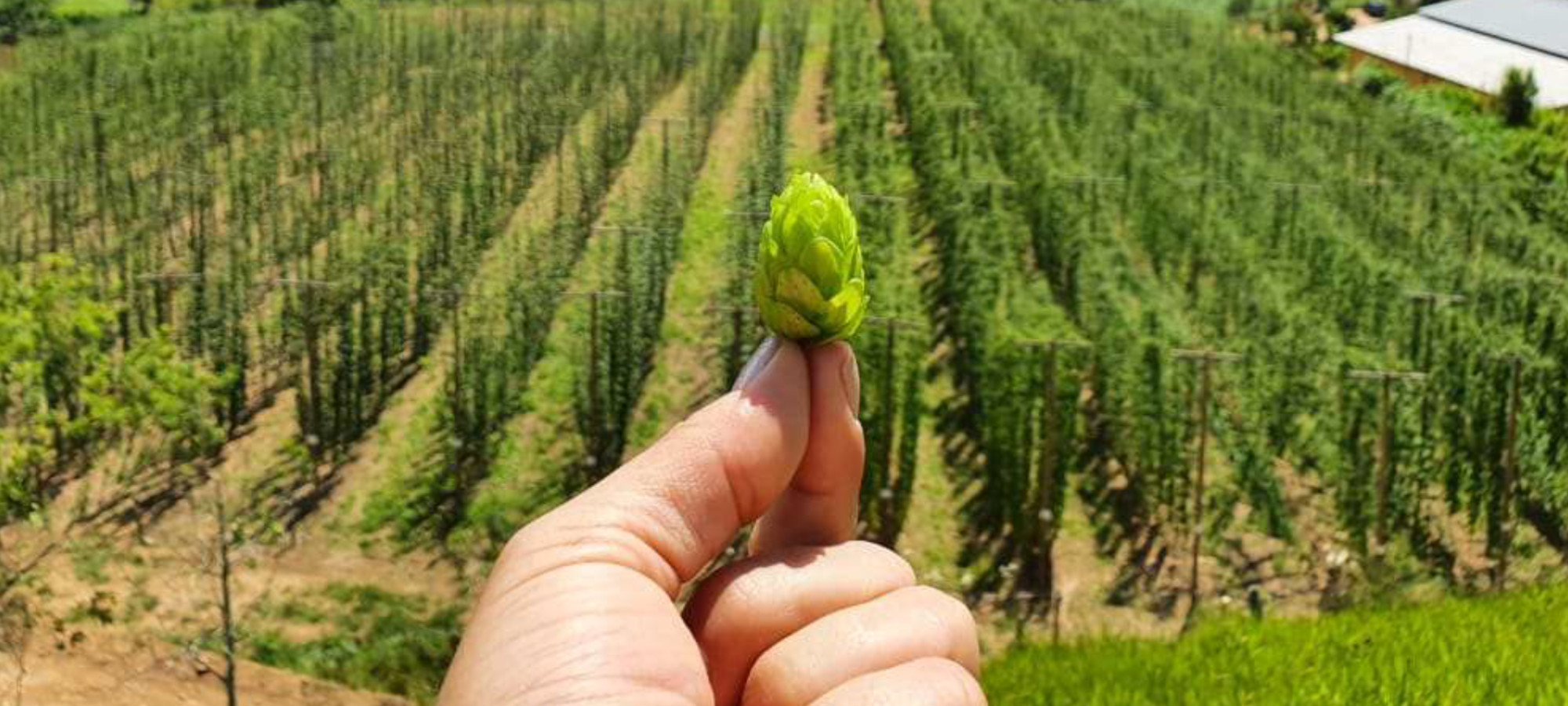
Researchers at the Alberto Luiz Coimbra Institute for Graduate Studies and Research in Engineering (Coppe/UFRJ) are leading a project with the potential to transform the hop production chain in Brazil and position the country as a global leader among tropical regions in the production and supply of this raw material, according to a note from "Agência Brasil". Hops are a plant whose flowers – the so-called cones – are essential for beer production, providing bitterness, aroma, and stability to the beverage. Its natural compounds also have applications in the food, ethanol, cosmetics, and pharmaceutical sectors, significantly expanding its economic and industrial potential. Currently, most of the hops consumed in Brazil are imported, mainly from cold climate regions where there is only one annual harvest due to light and temperature conditions. The project aims to replicate what the country has already done with crops such as soybeans and wheat: adapt hop production to the national environment, master the technology, and achieve scale with international competitiveness. The plan is being developed at the Advanced Center for Sustainability, Local Ecosystems and Governance (Casulo), at Coppe. “We are talking about structuring a new production chain in the country, integrating everything from cultivation with precision agriculture to industrial processing and quality control in our own laboratory,” explains coordinator Amanda Xavier, from the Production Engineering Program, to which Casulo is linked. Casulo/Coppe maintains a partnership with the Brazilian Hops Association (Aprolúpulo), which resulted in the creation of the 2024 Brazilian Hops Map, published in March 2026. This document is strategic for guiding research, public policies, and investments. The initiative includes the production of hop extracts, high-value-added inputs obtained through advanced CO₂ extraction technology, capable of serving different industrial segments with standardization, traceability, and large-scale supply. "With precision agriculture and laboratory control, we can offer standardized extracts that meet the needs of both craft breweries and the pharmaceutical industry," says Amanda.
Location
The selected region will receive investments and infrastructure, but will also concentrate technical knowledge, innovation, and productive articulation—factors that historically transform territories into national benchmarks. The Coppe professor says that the publication of the Brazilian Hops Map is already beginning to guide investment decisions and local policies. “We will now have data to plan cultivation locations, infrastructure demands, and technical training initiatives. Furthermore, the map helps us prioritize research for genetic improvement and the development of post-harvest protocols suitable for the tropical climate,” she adds. As with other Brazilian agricultural chains, the choice of location can be the starting point for the consolidation of a complete ecosystem, connecting production, industry, research, and the market. In practice, this represents a concrete opportunity to induce regional development, generate qualified jobs, and attract new businesses.
Competitive advantage
Today, in cold climate regions, there is only one annual harvest due to light and temperature conditions. However, recent advances show that the country can transform its climatic characteristics into a competitive advantage. With proper management and the use of technologies such as supplemental lighting, it is possible to achieve up to 2.5 harvests per year—a significant gain in productivity compared to traditional producing countries. In 2024, world hop production was around 114,000 tons. During the same period, Brazil produced only 81 tons, compared to a domestic demand of approximately 7,000 tons—a market estimated at around R$ 878 million per year. This means that the country produces only 1.11% of what it consumes, revealing a significant dependence on imports and ample room for growth. In this context, the decision regarding the project's location becomes even more relevant: it can accelerate import substitution, strengthen the national industry, and integrate Brazil into a higher value-added global chain.
This text was translated by machine from Brazilian Portuguese.