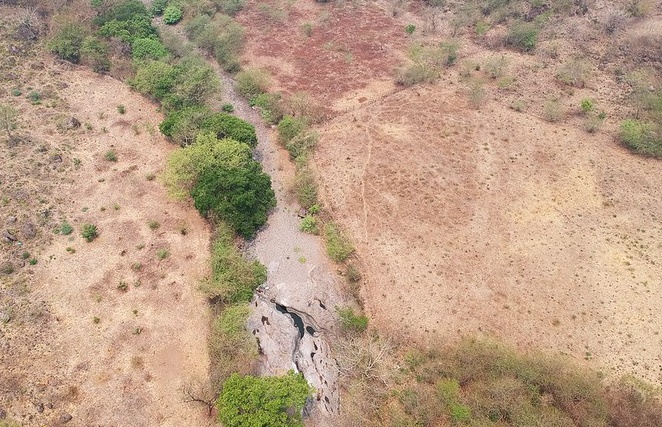
The Food and Agriculture Organization of the United Nations (FAO), the International Fund for Agricultural Development (IFAD), and the World Food Programme (WFP) are strengthening coordination and support for governments in Latin America and the Caribbean in light of El Niño forecasts. A high-level roundtable discussed measures for early action, preparedness, and strengthening resilience to extreme weather events. Despite progress made in recent years, more than 33 million people still suffer from hunger, 167 million face moderate or severe food insecurity, and more than 181 million cannot afford a healthy diet in the region. Furthermore, the Americas account for 22% of global losses caused by agricultural disasters, estimated at US$713 billion. El Niño could push more families into a vulnerable situation by causing aridity in the Central American Dry Corridor and altering precipitation and temperature patterns in the region. The World Meteorological Organization (WMO) estimates that there is a 70% to 80% probability that this phenomenon will reach its maximum intensity by the end of the year. Agencies also warned that high international prices for fuel, fertilizers, and food could worsen the situation by reducing families' purchasing power and increasing pressure on social protection systems and humanitarian responses. The panel opened with a presentation by Julian Báez, Director of the WMO Regional Office for the Americas, who highlighted that the phenomenon is expected to have moderate to severe consequences. The predicted impact includes increased rainfall in South America, which could result in flooding, and rainfall deficits in Central and North America.
One step forward
Preparation is important because budgets are shrinking, but climate-driven humanitarian needs—and potentially those driven by El Niño in the coming months—are increasing worldwide. Supporting governments and communities to reduce the risk of recurring food crises and investing in early climate action saves resources in the long term. In this regard, with the cooperation of the United Nations, several Central American countries activated early action plans upon reaching meteorological thresholds indicating a risk of water scarcity. More than 76,000 people are already preparing, with practical messages, cash transfers, distribution of basic grains, and monitoring of weather stations. Similarly, during the 2023–2024 El Niño, early action was implemented in nine countries in the region, benefiting more than 100,000 people in 250 rural communities through income transfers, distribution of agricultural inputs, rehabilitation of water systems, irrigation installation, animal health brigades, and strengthening of local capacities. In some Central American countries, interventions have led to increases of up to 40% in maize and bean production, as well as improvements in food security. The FAO Assistant Director-General and Regional Representative for Latin America and the Caribbean, Rene Orellana Halkyer, highlighted that the FAO, through emergency and resilience programs, tools, and forward-looking analyses, supports countries in identifying priority territories, critical gaps, and strategic investments to reduce vulnerabilities. “In the face of El Niño, the anticipatory actions implemented with governments and partners in nine countries in the region benefited hundreds of rural communities, with direct support, rehabilitation of water and irrigation systems, distribution of inputs, and capacity building, protecting livelihoods and increasing the production of staple crops by up to 40%.” For her part, Rocío Medina Bolívar, Regional Director of the IFAD's Division for Latin America and the Caribbean, highlighted that “investing in rural communities in the long term and strengthening their capacities is fundamental so that they can adapt to climate events, be prepared for future impacts, and continue producing food for the region. Building resilience today means creating conditions to generate employment, expand opportunities, and improve the quality of life in rural territories.” “Extreme weather events will continue to occur, but we can prevent them from triggering humanitarian crises. By combining insurance, credit, and digital financial services, we help governments and communities withstand droughts, floods, and storms,” explained Lena Savelli, Regional Director of the World Food Programme. “We are transforming humanitarian responses as we know them, so that social protection systems leave no one behind and communities can save, protect themselves, and receive support as soon as early warnings are activated, instead of waiting for help after the impact,” she added. The high-level panel included regional authorities and experts in risk management, humanitarian cooperation, and agriculture, among them Hodwell Ferguson, Minister of Agriculture of Belize; Amanda Rivera, Director of Temporary Shelters at the National Secretariat for Risk Management of the Government of Ecuador; Adherbal De La Rosa, Executive Secretary of the Center for Coordination for Disaster Prevention in Central America and the Dominican Republic (CEPREDENAC); and Luigi Pandolfi, Head of the Regional Office for Latin America and the Caribbean of the Directorate-General for Civil Protection and European Humanitarian Aid Operations (DG ECHO).
This text was translated by machine from Brazilian Portuguese.