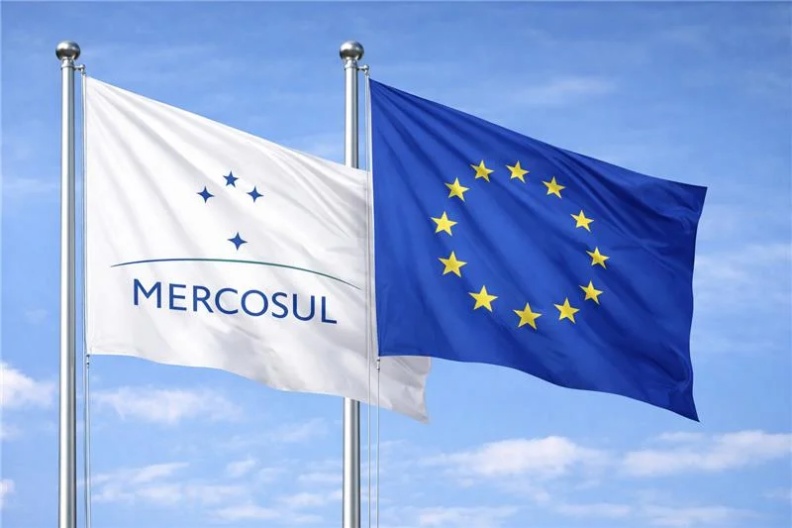
The Ministry of Development, Industry, Trade and Services (MDIC) has registered the first operations using tariff quotas foreseen in the Mercosur-European Union Agreement. Since the agreement came into effect on May 1, 2026, the Secretariat of Foreign Trade (Secex) has already approved eight export licenses and six import licenses for products covered by the mechanism. The export licenses issued up to May 10 correspond to operations involving fresh beef, frozen beef, boneless poultry, cachaça, among others. In the case of boneless poultry and cachaça, exports will enter the European Union with zero tariffs within the quotas foreseen in the agreement. Beef now has two preferential access routes to the European market. The so-called Hilton Quota, a historical mechanism that existed before the agreement, provided for a 20% tariff on prime Brazilian cuts. With the entry into force of the treaty, this tariff was reduced to zero. Furthermore, the agreement created a new quota of 99,000 tons shared among Mercosur countries. Before the agreement, exports outside the Hilton Quota were subject to a tariff of 12.8% plus €304.10 per 100 kg. Now, they will be subject to an in-quota tariff of 7.5%. Regarding imports, the six licenses issued authorize operations involving chocolates, tomatoes, and cheeses originating from the European Union. For cheeses, there is already an initial tariff reduction foreseen in the agreement, with the rate decreasing from 28% to 25.2% within the negotiated preference. For products such as tomatoes and chocolate, tariff reductions will occur progressively starting in 2027, maintaining the same tariffs currently applied in this first year of validity ("year zero"). The operations were made possible by Secex Ordinances No. 491 and No. 492, published on May 1st, which regulated the operational procedures for the use of tariff quotas in bilateral trade between Mercosur and the European Union. These regulations, later amended by Ordinances No. 494 and No. 495, established criteria and rules for the administration of the quotas. Trade without quantitative restrictions: Since May 1st, most trade between the two blocs has operated with reduced or eliminated tariffs, without quantitative restrictions and without the need to use quotas. Therefore, more than 5,000 tariff lines, equivalent to 54.3% of the total tariff area, now have zero tariffs for entry into the European Union. In Mercosur, 1,152 tariff lines, equivalent to 11% of the total, also operate with zero tariffs for European products. To benefit from the tariff advantages foreseen in the agreement, operators only need to follow the ordinary foreign trade procedures and prove the origin of the goods, according to the rules negotiated between the parties. In the specific case of products subject to tariff quotas—which represent a small portion of bilateral trade, about 4% of Brazilian exports and 0.3% of imports—the use of preferences requires specific licensing and certification procedures within the Siscomex Single Portal. All necessary regulations, as well as operational and systemic adjustments for the implementation of these operations, were completed in time for the agreement's entry into force. The system is already fully operational for receiving, processing, and issuing licenses linked to the tariff quotas foreseen in the treaty. Implementation of the Agreement Tariff quotas are part of the set of instruments negotiated in the Mercosur-European Union Agreement to expand bilateral trade, guarantee regulatory predictability, and broaden access to strategic markets. The Siscomex Single Window is now fully operational for receiving and processing requests related to tariff quotas under the Mercosur-European Union Agreement, ensuring operational security, predictability, and fluidity in foreign trade operations. In the Brazilian case, this is done through the Siscomex Single Window, where importers and exporters register license requests linked to the quotas stipulated in the agreement.
This text was translated by machine from Brazilian Portuguese.