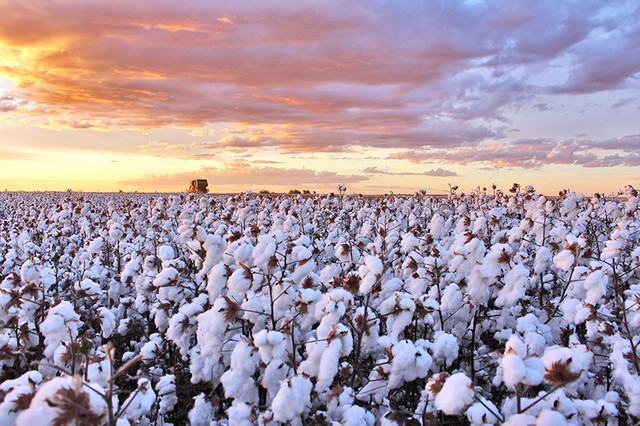
Brazilian cotton exports totaled 370,400 tons in April. This is the highest volume ever recorded for the month, according to data released this Thursday (7) by the Secretariat of Foreign Trade (Secex), of the Ministry of Development, Industry, Trade and Services (MDIC) and analyzed by Anea. The result represents a growth of 54.9% in volume compared to April 2025, while revenue advanced 43.7%, reaching US$ 560.6 million. Cotton accounted for 1.64% of total Brazilian exports in the month, occupying the 12th position in the overall ranking of shipments from the country and the third position among products of the agricultural sector, with a share of 6.07%. The performance suggests a trend resumed in March, with Brazil exporting high volumes even outside the period historically considered strongest for shipments of the fiber. “The numbers show that Brazilian cotton has gained commercial consistency throughout the year. We are exporting at a strong pace even in months that were previously seen as slower for the sector. This is a result of competitiveness, buyer confidence, and the consolidation of Brazil as a regular supplier to the global industry,” says the president of Anea, Dawid Wajs.
Destinations
Among the main destinations in April, Bangladesh led the purchases, accounting for 18.4% of Brazilian shipments, followed by Pakistan (17.5%), China (14.8%), Vietnam (12.2%), Turkey (11.8%) and India (11%). Indonesia, Malaysia, Egypt, South Korea, Mauritius, Algeria, Thailand and South Africa also appear among the buyers.
Indian market
According to Anea, the continued Indian purchases are noteworthy because they occur even after the end of the tariff exemption for cotton imports, which ended in December of last year. “India shows, once again, that it has ceased to be a one-off movement and has become a market effectively consolidating for Brazilian cotton. Even without the tariff exemption, it continues to buy significant volumes, which demonstrates the space that our fiber has conquered within the Indian textile industry,” observes Wajs.
Conflict in the Middle East changes the fiber environment.
The performance of Brazilian exports is occurring at a time of strong geopolitical instability. Tensions in the Middle East and risks involving the Strait of Hormuz, a strategic route for global oil transport, have significantly increased volatility in the energy market in recent weeks. Throughout April, Brent crude oil traded at high levels, exceeding US$120 per barrel at the end of the month, amid fears of restrictions on maritime traffic in the region. In recent days, however, prices have retreated amid signs of negotiations involving the United States and Iran, with Brent returning to the range close to US$100. For Anea, in this context, Brazilian cotton enters with "important advantages, such as quality raw material, traceability, regularity of supply and proven sustainability," says Wajs. The entity also highlights that the advancement of the environmental agenda in the fashion industry and the international textile sector favors natural fibers with a smaller environmental footprint and traceable origin, a characteristic that Brazilian cotton has been strengthening in recent years through investments in quality, certification and sustainability.
This text was translated by machine from Brazilian Portuguese.