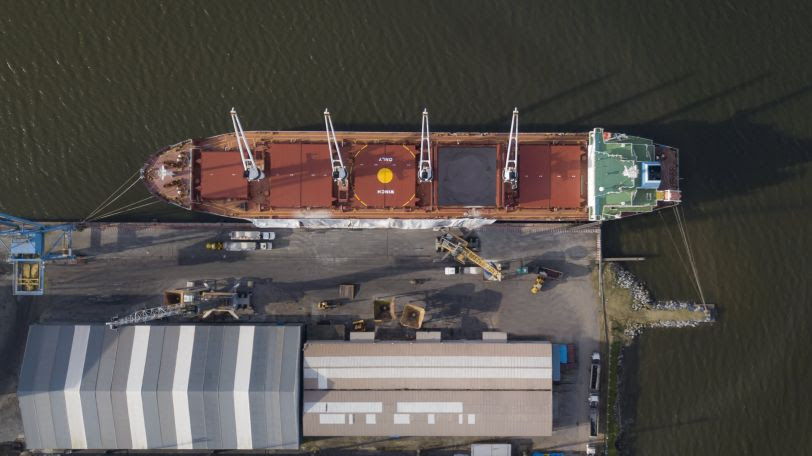
The Port of Paranaguá handled 70% of Brazilian soybean oil exports between January and March 2026, according to Comex Stat, a federal government system that compiles data on foreign trade. During this period, the Paraná port shipped 386,300 tons of the product. According to the statistics center of Portos do Paraná, this volume represents a 38% increase compared to the same period in 2025, when 280,000 tons were exported. The main buyer markets are concentrated in Asia and Africa. In March alone, Paranaguá's share of national soybean oil exports reached 75.3%, with 135,000 tons shipped. SOLID BULK CARGO – In terms of volume, soybeans were the commodity that experienced the greatest growth in cargo handling at Paraná's ports in the first quarter of 2026. A total of 4.6 million tons were exported, according to data from the Port Authority and Comex Stat, representing one in every five tons of Brazilian soybean exports. The volume of soybeans shipped registered a 12% increase compared to the same period in 2025, when 4.1 million tons were exported. "Our quality control and overall operational efficiency guarantee international recognition and the constant market demand for Paraná's ports," stated Luiz Fernando Garcia, CEO of Portos do Paraná. With shipments of 1.3 million tons, soybean meal also stood out in the quarter's exports, representing 25.6% of the national volume — the second largest in the country, even with a slight decrease compared to the same period in 2025. In March alone, 700,000 tons were shipped, mainly to Asia and Europe, a volume equivalent to more than 30% of Brazilian exports. IMPACTS – In the accumulated period up to March, Paraná's ports handled 16.7 million tons, a volume 3.9% lower than that recorded in the same period of 2025. Among the factors that influenced the result is the reduction in sugar exports, impacted by the fall in international prices and the increase in global stocks. Corn exports also show a decline, as part of the production has been directed to the domestic market for the manufacture of ethanol, an alternative fuel to petroleum. This movement is related to the international scenario, marked by geopolitical tensions, such as the conflict between the United States and Iran. These international conditions are also beginning to impact fertilizer imports. Paraná is the main gateway for these inputs into Brazil. In the first quarter of last year, 2.7 million tons were imported, while in the same period of 2026, the volume fell to 2.2 million tons. On the other hand, malt imports registered a 227% increase, while barley grew by 10%. Petroleum derivatives, however, showed a 9% increase in imports compared to 2025.
This text was translated by machine from Brazilian Portuguese.