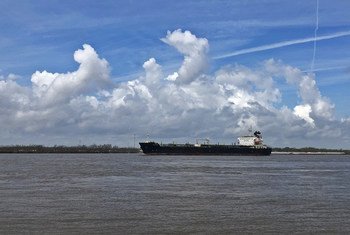
British Prime Minister Keir Starmer has rejected participating in the naval blockade announced by US President Donald Trump in the Strait of Hormuz, after the White House said that "other countries" would participate in the mission, according to a note from "Agência Brasil". "My decision was very clear: whatever the pressure, and there has been considerable pressure, we will not be dragged into war," Starmer told the BBC on Monday (13). British media reported that UK minehunters and anti-drone capabilities would continue operating in the Middle East, but that British Navy ships and soldiers would not be used to block Iranian ports. The UK and France plan to hold a conference "in the coming days" to discuss restoring freedom of navigation in the Strait of Hormuz "as soon as circumstances permit," according to French President Emmanuel Macron. “We will organize a conference with those countries willing to contribute alongside us to a peaceful multinational mission aimed at restoring freedom of navigation in the strait. This mission is strictly defensive, separate from the belligerent parties to the conflict,” Macron said on social media. Another country that has been pressured by Donald Trump to contribute to the effort to reopen the strait is Japan, a major importer of oil from the Persian Gulf countries. In a press conference held today, the Japanese government's chief cabinet secretary, Minoru Kihara, said that Japan is closely monitoring the situation and advocated for an agreement through diplomacy. “The most important thing is to achieve a de-escalation of the situation, including ensuring the safety of navigation in the Strait of Hormuz, and to reach a final agreement through diplomacy as quickly as possible,” he stated, according to the Japan Times. The refusal of allies to participate in US efforts to reopen the Strait of Hormuz has generated a reaction from President Trump, who has called the countries “cowards” and threatened to leave NATO (North Atlantic Treaty Organization). :: China For its part, China stated that resolving the issue of navigation in the Strait of Hormuz requires, first and foremost, resolving the armed conflict in the Middle East. “The main cause of the disturbance in the Strait of Hormuz is the military conflict. To resolve the issue, the conflict must cease as soon as possible. All parties need to remain calm and exercise restraint. China will continue to play a constructive role,” said Guo Jiakun, spokesperson for the Chinese Ministry of Foreign Affairs, at a press conference on Monday. :: Iran threatens retaliation The Armed Forces of the Islamic Republic of Iran threatened to retaliate against ports in the Persian Gulf and the Sea of Oman if the security of Iranian ports is jeopardized. Tehran also stated that enemies of the Persian country will not be able to pass through Hormuz. Following the failure of peace negotiations in Islamabad, the capital of Pakistan, this past weekend, US President Donald Trump announced he would block the passage of ships through the Strait of Hormuz. “The blockade will be applied impartially against vessels of all nations entering or leaving Iranian ports and coastal areas, including all Iranian ports in the Persian Gulf and the Gulf of Oman,” the US Central Command said in a statement. Last week, Russia and China vetoed a resolution presented by Bahrain, on behalf of the Persian Gulf countries, which sought to authorize countries to use force to reopen the Strait of Hormuz. The price of Brent crude oil rose again on Monday following the US naval blockade announcement, reaching the US$100 level again, an increase of about 5.5%. Before the war, approximately 20 million barrels of oil passed through the Strait per day. It is estimated that about 20% of the world's oil and gas passes through Hormuz.
This text was translated by machine from Brazilian Portuguese.