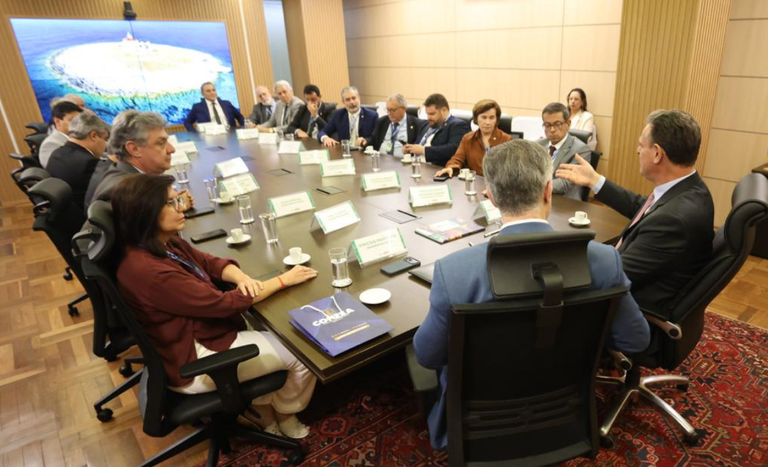
With the aim of strengthening agricultural and livestock health in the country, the Minister of Agriculture and Livestock, Carlos Fávaro, and the president of the Federal Council of Engineering and Agronomy (Confea), Vinicius Marchese, signed, this Wednesday (26), a Technical Cooperation Agreement aimed at improving the Unified System for Attention to Agricultural and Livestock Health (Suasa). The initiative foresees the integration of institutional actions, the expansion of the technical training of professionals and the exchange of information to strengthen Brazilian agricultural and livestock defense. The cooperation between the Ministry of Agriculture and Livestock (Mapa) and the Confea/Crea System seeks to align and coordinate efforts to expand the technical qualification of professionals working in agricultural and livestock production chains, in addition to strengthening the application of sanitary standards throughout the national territory. “Cooperation with the Confea System expands the country's technical capacity in the area of agricultural and livestock health and strengthens the performance of professionals who work directly in the production chains. It is an important step to guarantee quality, safety and competitiveness to Brazilian agriculture,” said the minister. Fávaro also highlighted the symbolic significance of signing the agreement in his career leading the ministry. “This is one of the last acts I will perform as Minister of Agriculture and Livestock. To conclude this cycle by establishing a cooperation that strengthens agricultural and livestock health and values the technical knowledge of professionals in the sector is a source of great satisfaction,” he said. The president of Confea, Vinicius Marchese, highlighted that the formalization of the partnership is the result of a process that began about two years ago and found a favorable environment in the Ministry of Agriculture to advance to the signing of the agreement. “This agreement was in process for approximately two years. Under Minister Fávaro's administration, we found a great deal of openness in the ministry to dialogue and advance this cooperation, which is very important to strengthen the technical and institutional work of engineering and agronomy in the country,” said Marchese. Among the planned initiatives are the holding of technical events, training courses for professionals working in the sector, as well as the exchange of knowledge and inspection methodologies related to agricultural production chains. The actions also include collaboration in the implementation of sanitary regulations and the dissemination of best practices among professionals in the field. The agreement's work plan also includes training in the inspection of products of plant origin, training for professionals in the areas of seeds and grain classification, training for pesticide applicators, and courses focused on issuing agronomic prescriptions. The partnership will have an initial term of five years and does not foresee the transfer of financial resources between the institutions. The actions will be carried out in a cooperative regime, with each party responsible for the costs of the activities under its competence. The execution of the activities will be monitored by a technical group formed by representatives of both institutions, responsible for monitoring the planned actions and evaluating the results throughout the term of the agreement.
This text was translated by machine from Brazilian Portuguese.