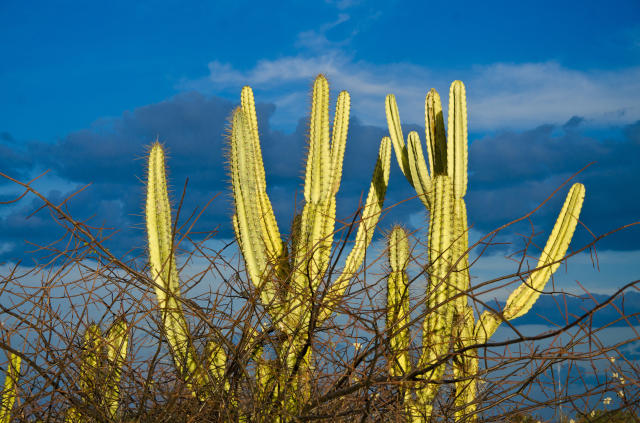
The project will last three years and brings together teams from five Brazilian states. The technology combines microbial biostimulants and integrated pest management. Tests will be carried out directly on family farms. The initiative seeks to strengthen agroecological systems and cotton production in the Semi-Arid region and adjust procedures for integrated pest control. The expectation is to reduce losses due to drought and increase food security for families. Embrapa has launched a new research project to address one of the main challenges facing family farming in the Brazilian Semi-Arid region: the loss of productivity caused by drought. Named CaatÁgua, the initiative aims to develop a biostimulant capable of increasing plant tolerance to water stress and adapting biological pest control technologies to the region's climatic conditions. The proposal was approved in the Finep's call for proposals on Socio-productive Chains of Family Farming and Agri-food Systems – ICT, and will last 36 months. The project brings together teams from different Embrapa units and partners from five states — Paraíba, Ceará, São Paulo, Goiás, and the Federal District. According to researcher Paulo Barroso, from Embrapa, the initiative seeks to develop technologies directly geared towards the reality of family farming in the Semi-Arid region. “The idea is to create solutions based on native microorganisms, capable of helping plants withstand periods of drought and, at the same time, improve pest control in production systems with little irrigation,” he states. The proposal arose from demands presented by family farmers in the region, who point to drought as the main cause of crop losses. In years of more regular rainfall, however, another problem intensifies: the high incidence of insect pests that affect essential crops such as cowpea, corn, and cotton. The project intends to address these two points by combining microbial technologies with integrated pest management strategies. The objective is to increase water use efficiency, reduce agricultural losses, and improve the productive stability of family farms. :: Microorganisms of the Caatinga Part of the CaatÁgua solutions originates from research developed by Embrapa Meio Ambiente, which created the biostimulant Auras from the bacterium Priestia aryabhattai. The product has been studied to mitigate the effects of droughts and was developed based on microorganisms isolated in the Caatinga biome. This microbial collection, considered one of the most diverse in the country, has been maintained and studied for years by researchers at the unit. From it, biofertilizers, biofungicides, and bioinsecticides with potential for agricultural application have already been developed. Another aspect of the project involves the biological control of pests. Researchers from Embrapa Genetic Resources and Biotechnology, Embrapa Cotton, and Embrapa Environment have gathered a broad collection of entomopathogenic fungi, microorganisms capable of infecting and controlling insect pests. Part of these strains will be evaluated and adapted specifically for the conditions of family farming in the Semi-Arid region, characterized by high temperatures, little irrigation, and limited access to agricultural equipment. :: Participatory testing with farmers The validation of the technologies will be carried out in partnership with the Borborema Agroecology Network, an organization formed by family farmers from Paraíba. The network brings together producers who work with agroecological systems and organic cotton cultivation in consortia with food crops. Through this partnership, some of the experiments will be conducted directly on rural properties, in a participatory research model. The strategy seeks to ensure that technologies are adapted to real production conditions. More than 70% of the areas cultivated by family farmers in the Semi-Arid region are occupied by cowpea and corn. By reinforcing the resilience of these crops and strengthening the agroecological cultivation of cotton, the project aims to reduce losses and increase the food security of families. Some of the microorganisms studied were isolated from the roots of native Caatinga plants, traditionally recognized by the local population as resistant to drought, such as the mandacaru cactus. The idea is to transform the biodiversity of the biome itself into a source of agricultural solutions. :: Strengthening agroecology The project also aims to contribute to the consolidation of agroecological cotton production systems in the Northeast, known as Agroecological Cotton Consortia. These systems integrate fiber cultivation with foods such as beans, corn, and sesame, expanding productive diversity and family income. In addition to the development of the bioinoculant, CaatÁgua foresees the improvement of integrated pest management protocols that incorporate entomopathogens and parasitoids, alternatives compatible with organic and agroecological systems. The expectation is to generate significant environmental benefits, such as less impact on pollinators and natural enemies of pests, as well as reducing the risk of soil and water contamination. :: Training and social impact During the three years of execution, the project will also promote courses, workshops, and educational materials aimed at participating farmers. The goal is to train multipliers of sustainable practices and strengthen existing community networks. In total, about 90 farmers are expected to participate directly in the activities, but the reach of the technologies could be greater, since the bio-inputs and protocols developed will have low cost and simple application. At the end of the 36 months, the researchers expect to deliver two main results: an osmotolerant bioinoculant and an integrated pest management protocol adapted to the conditions of the Semi-Arid region. The technologies will be freely available for use by family farming organizations. With the intensification of drought periods in the Northeast, initiatives like CaatÁgua seek to increase productive resilience, strengthen the income of rural families, and value the biodiversity of the Caatinga as a source of innovation for agriculture.
This text was translated by machine from Brazilian Portuguese.