Over the last 50 years, the Brazil consolidated a strong commercial relationship with the Arab and Muslim markets, who came to see the country as a reliable suppliercapable of meeting the cultural and religious requirements related to quality standards and certification for practitioners of Islamic faith.
Due to these restrictions, Muslims they only consume products, such as proteins, produced according to the Halal rules, Arabic term what does it mean “lawful”The concept encompasses not only foodbut also cosmetics, drugs, tourism and clothing“Halal caters to people who profess the Islamic faith, but it goes beyond that: it also reaches consumers who seek a healthier lifestyle,” he states. Mohamad Mourad, Secretary-General of Arab-Brazilian Chamber of Commerce.
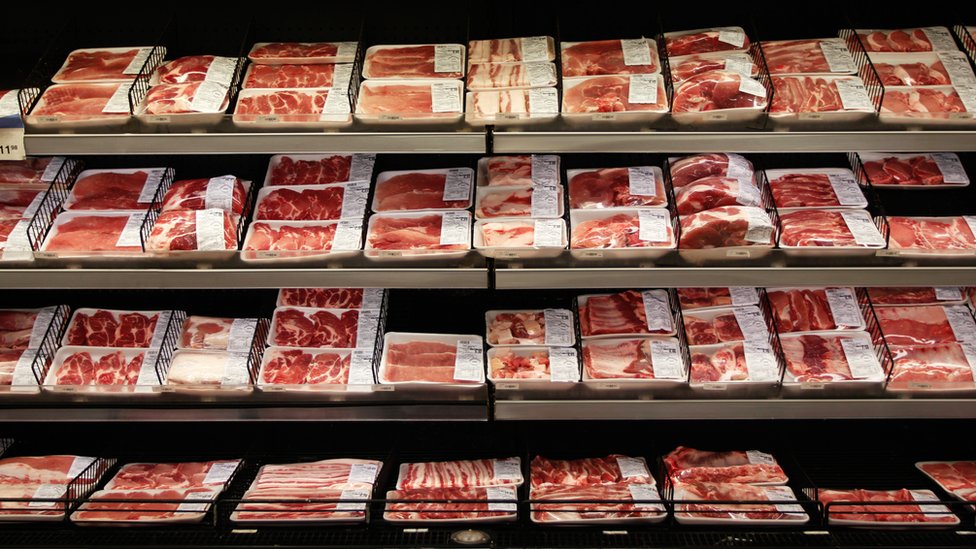
Currently, countries with a Muslim majority represent a significant portion of the Brazilian exports, especially in the protein sector. The Brazil is the world’s largest exporter of halal beef., a product that is in high demand in these markets.
According to DATAGRO LivestockIn 2025, the country will have shipped a total of 3.1 million tons of beef in its natural stateFrom this volume, 210.6 thousand tons of halal beef their destination was Middle EastIn the segment of birdsThe leading role is also maintained: exports were made 4.96 million tons of poultry protein in 2025, being 1.5 million tons of halal chicken meat destined for the region.
Since June 2025, when the United States attacked Iranian nuclear facilitiesthe supply the region is located, at some level, threatenedAt the end of February this year, however, the conflict in the region gained momentum. larger proportions with new attacks by the US government and participation of Israeli forces.
This escalation resulted in Closure of the Strait of Hormuz, what raised oil and natural gas prices, affected maritime logistics and it caused disruptions in air and road transport in the region. As a consequence, the halal meat marketThe system, essential for the Islamic population, began to face operational difficulties.
Therefore, Brazilian exporters and importers They are looking for alternatives to maintain the trade flow and ensure the supply of Arab and Asian markets.
Alternative routes are coming onto the radar.
In addition to proteins, the Middle East It is also an important destination for other national products, such as grainsThe Iran, for example, accounted for approximately 22.2% of Brazil’s corn exports last year, therefore the greater the effects of the conflict, The greater the damage to Brazilian shipments..
In the face of logistical risksCompanies have been seeking alternatives to maintain scheduled shipments. “We are evaluating combinations of road routes with alternative portsin addition to maritime routes via the Cape of Good Hopein South Africa“Mourad explains. The Suez Canalno Egypt, also emerges as an option, although the high volume of vessels This could limit operational agility.
According to secretary-generalThe focus is on the short term. to mitigate losses and preserve business relationships.“We hope the conflict will end soon and that normalcy will be restored as quickly as possible,” he says.
Short-term impacts on shipments
According to DATAGRO Livestockthe conflict can affect directly about 7% of Brazilian exports of fresh beef and 30% of poultry shipments.
To Roberto Perosa, president of Brazilian Association of Meat Exporting Industries (Abiec)The impact could be even greater due to the region’s logistical role. countries of the Middle East they function as redistribution hubs for other Asian markets“This broadens the scope of the crisis,” he says.
According to the entity, between Between 30% and 40% of the sector’s exports could be impacted if the conflict continues.. Just direct sales of beef to the Middle East They totaled approximately US$2 billion last year.Considering cargo passing through the region, The potentially affected volume could reach US$5 billion or US$6 billion..
There are already immediate effects on logistics, “we observe the Suspension of container bookings for shipments destined for or in transit through the region, which temporarily disrupts the flow of trade,” he says. Perosa.
Despite this, the Abiec he believes it is still too early to review the Halal market projections for 2026“However, the sector is monitoring the situation closely, as a prolonged interruption could have a significant impact on exports and the entire production chain,” he added.
Mourad also highlights humanitarian impact of the crisis“In the first week of attacks, Nine Arab countries that did not directly participate in the bombings had already been affected.“He states.”
What is halal meat?
THE Halal meat It differs from other forms of production by following the precepts of Sharia, Islamic legal system based on the Quran., sacred book of the religion. The process involves specific rules for creation, slaughter and distribution of animals, in addition to certification by specialized bodies.
THE The slaughter must be carried out by a Muslim professional., with the recitation of prayers and with the animal facing Mecca, sacred city of IslamThe procedure requires a quick incision, which minimizes suffering and allows for complete drainage of the blood.
Despite a strong presence in exports, the Domestic consumption of halal products in Brazil It is still limited. “Demand is small, but we are working to expand this market in the country,” he says. Mourad.
Historically, the Arab-Brazilian Chamber of Commerce works on the connection between the Brazil and the 22 countries of the Arab League and since 2023, coordinates the project Halal from Brazil, in partnership with Federal Government, expanding its operations to the 57 countries of the Organization of Islamic Cooperation (OIC) and connecting the country to more Islamic markets.
This text was translated by machine from Brazilian Portuguese.